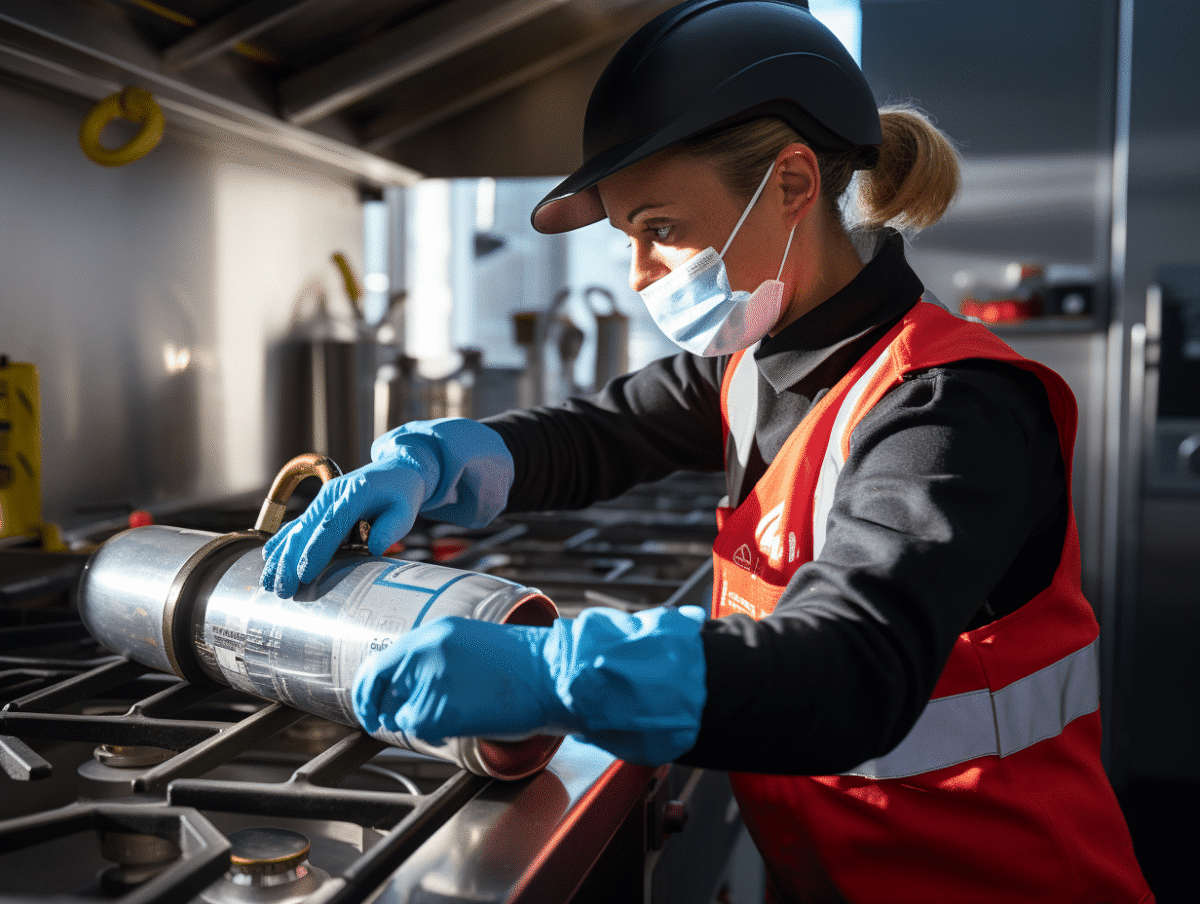
Installing a gas bottle at home is a task that must be approached with seriousness and caution. Whether it’s to power a stove, a space heater, or a barbecue, handling gas involves following precise steps to ensure the safety of users and the home. Make sure to fully understand the installation process and comply with current safety standards. Practical advice for carrying out this operation with peace of mind is therefore essential, just as it is important to know the signs that indicate whether a bottle is properly installed or, conversely, if there is a risk of leakage.
The detailed procedure for installing your gas bottle independently
Before proceeding with the installation of your gas bottle, ensure you have a regulator suitable for the type of gas – butane or propane – and the capacity of the bottle. This part is essential as it regulates the pressure of the gas coming out of the bottle for safe supply to the appliances. Also, check the validity date of the connecting hose, which, although often forgotten, is a key element of your installation. The hose has a limited lifespan and should be replaced periodically to avoid the risk of leaks.
Learn how to connect a propane or butane gas bottle safely by following these guidelines. Ensure that the bottle’s valve is fully closed before any handling. Attach the regulator to the bottle’s valve, following the indicated installation direction, and tighten by hand without forcing. Then connect the hose to the regulator and the appliance to be powered, ensuring that the connections are airtight. For this, use appropriate clamps and never resort to makeshift fittings.
Once the installation is complete, gradually open the bottle’s valve and monitor for any leaks. To do this, apply soapy water to the connections: the formation of bubbles would indicate a possible gas leak. Be sure to repair any detected leaks before using the bottle. Know that the appliances you plan to power must be compatible with the type of gas used, whether butane or propane, to ensure optimal and safe use.
Essential safety measures for handling and storing your gas bottle
Safety: this term takes on a crucial dimension when it comes to handling gas bottles. The measures to be taken when connecting and disconnecting a gas bottle must be applied rigorously. First, connecting a gas bottle requires a well-ventilated area to avoid gas accumulation in case of a leak. Ensure that the space is free from any heat source or spark. Similarly, when disconnecting, carefully close the bottle’s valve to cut off the gas supply and unscrew the regulator.
The regulations serve as a safeguard by strictly framing the conditions for storing and installing gas bottles. For storage, prefer a dry, well-ventilated place, protected from extreme temperatures. Gas bottles should never be exposed directly to sunlight or temperatures below -5°C for butane and -44°C for propane. Follow the manufacturer’s specific guidelines for vertical or horizontal storage depending on the type of bottle.
In the event of a detected gas leak, take immediate measures to avoid any risk of fire or explosion. Cut off the supply by closing the bottle’s valve, ventilate the area, and keep any flames or electrical devices that could generate sparks away. Contact emergency services if necessary and do not reuse the bottle until a professional has checked and repaired the leak. The safety of gas installations should be a continuous concern and never relegated to the background.