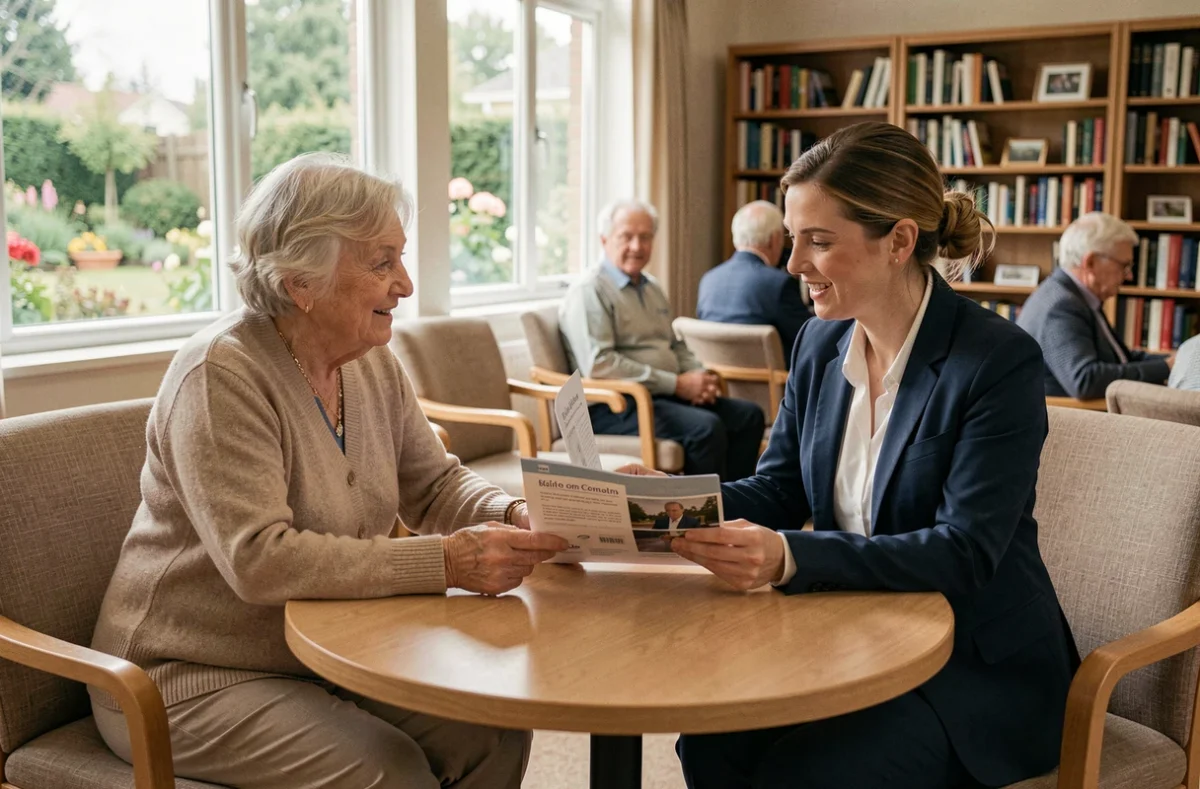
In France, choosing a care home involves far more than location or the advertised price. The national assessment framework of the French National Authority for Health (HAS) now makes it possible to view quality assessment results for social and medico-social care facilities, with specific indicators highlighting each facility’s strengths and areas for improvement.
The CNSA directory, meanwhile, lets you compare prices and services on a like-for-like basis, including out-of-pocket costs. These public tools are changing the game for families seeking reliable information before making a commitment.
Freedom to leave a care home: balancing residents’ independence and safety
Freedom of movement is often overlooked when choosing a facility. The residency contract and house rules set out the practical arrangements for absences and outings, as well as any charges that may apply. These documents deserve careful review before admission, as practices vary from one facility to another.
As a rule, residents in EHPADs retain the right to receive visitors and leave freely, unless their health requires restrictions subject to appropriate safeguards. For concerned relatives, the answer is not to lock the doors, but to look at how the facility organizes supervision and support. Ask how outings are managed day to day: is voluntary geolocation available? Can staff accompany residents? Are visiting hours flexible?
Comparing care home services on Jeune Senior makes it easy to identify facilities that clearly explain their admission and outing arrangements, providing a useful first screening tool.
Overly restrictive rules on outings may point to staff shortages rather than a genuine concern for residents’ safety. Conversely, a facility that clearly explains how it tailors supervision to each resident’s needs demonstrates a person-centred approach.
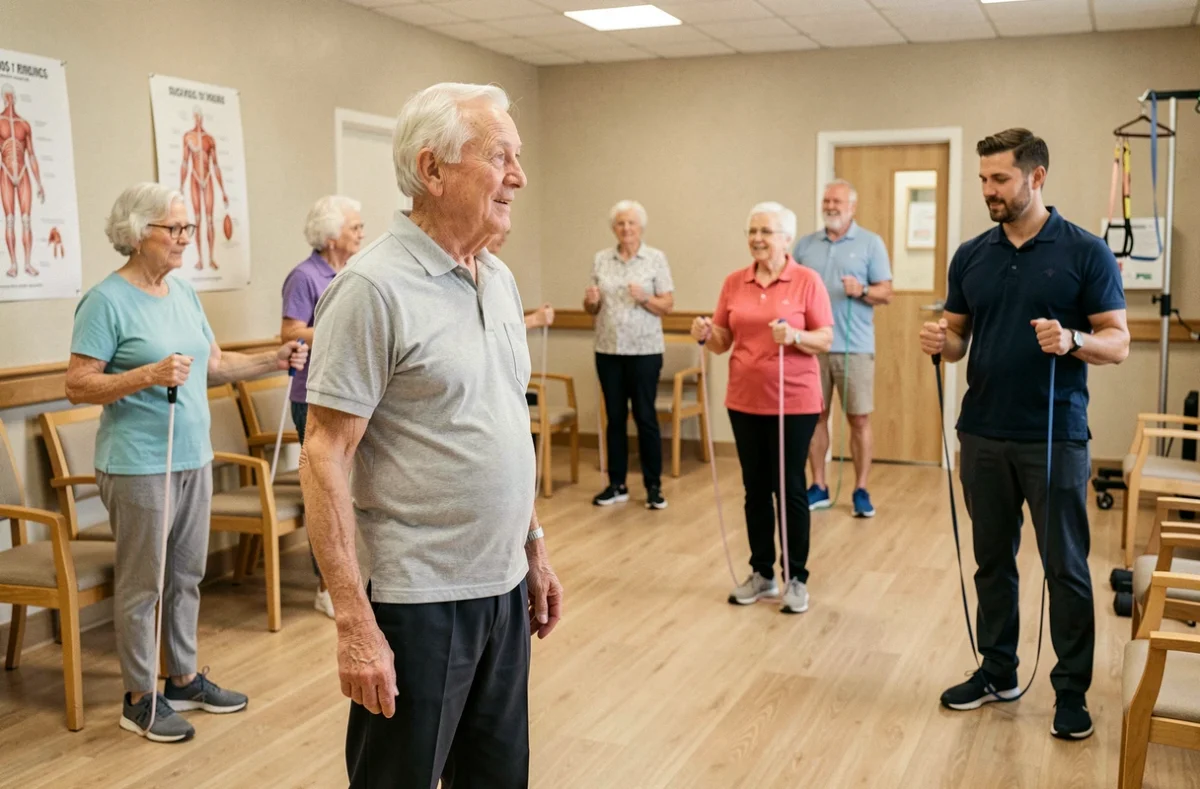
HAS quality assessments: look beyond the overall score
Online reviews of care homes reflect individual experiences, which may be outdated or biased. Assessment reports published by the HAS offer a more structured way to evaluate facilities. Based on a national framework, they provide practical information about the quality of care, personalized support and respect for residents’ rights.
The overall score is not enough. What matters is the nature of the shortcomings identified. A facility that scores well for care but poorly for respect for privacy or resident involvement in decisions affecting them presents a different concern from one with an ageing building but a stable, well-trained care team.
The personalized support plan as an indicator of genuine quality
Every EHPAD must develop a personalized support plan with the resident and, if they wish, their relatives. It covers both daily life and care. During a visit, ask three specific questions:
- Who takes part in drawing up the personalized plan, and can the resident refuse certain recommendations?
- How often is the plan reviewed, and how are changes in health or preferences taken into account?
- How are the resident’s routines (waking time, meals, activities) accommodated day to day?
A personalized plan reviewed at least once a year with the resident’s active involvement is a reliable sign of quality support. If the team cannot answer these questions during your visit, consider it a warning sign.
EHPAD fees: compare actual out-of-pocket costs
The advertised price of a care home does not always reflect what a family will actually pay each month. Fees are divided into three parts: accommodation, dependency care and medical care. Medical care is covered by the French health insurance system. Dependency care may be partly covered by the APA. Out-of-pocket costs mainly relate to accommodation, and this is the amount that varies most from one facility to another.
The CNSA directory can help you check whether a higher fee includes services such as hairdressing, laundry and activities, or whether these are charged as extras. Two facilities with the same advertised monthly price may result in very different out-of-pocket costs, depending on what is included in the basic fee.
Social assistance approval: a criterion to check in advance
Social assistance for accommodation (ASH) is available only at facilities with approved places. Not all EHPADs are approved to accept social assistance, and the number of approved places may be limited within a facility. Each département sets its own eligibility rules, and the application should be submitted soon after admission so that, subject to certain conditions, coverage can be backdated to the admission date.
Checking whether a facility is approved before choosing it can help prevent financial difficulties if the resident’s or family’s resources prove insufficient in the medium term.
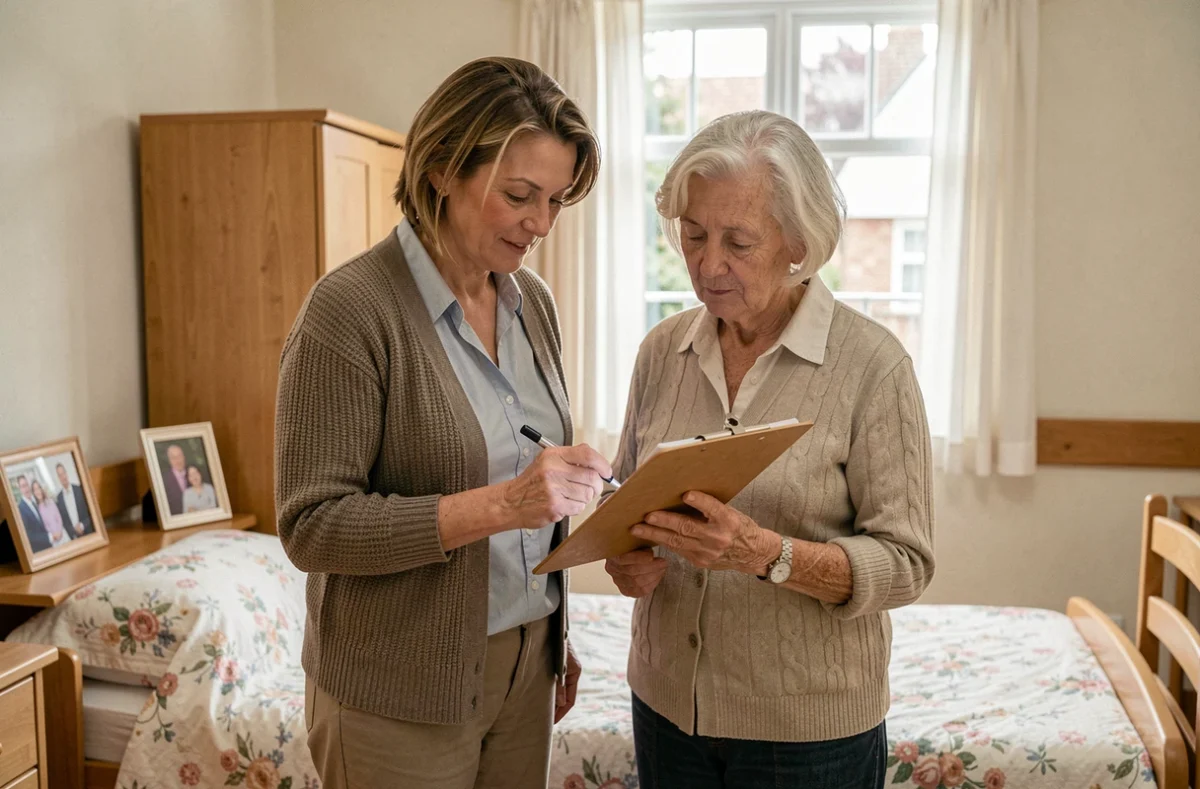
Visiting an EHPAD: what the surroundings reveal about how it operates
Care home guides emphasize the importance of visiting, but often fail to explain what to look for beyond cleanliness and a friendly welcome. Three factors offer more reliable insight into day-to-day operations.
- Staff turnover among care workers: a stable team knows the residents, their routines and their vulnerabilities. Ask how long the care assistants you meet have worked at the facility.
- Meal arrangements: dining-room service with menu choices and flexible mealtimes reflects a commitment to residents’ independence. A single service with no alternatives suggests that logistics take priority over comfort.
- Access to outdoor spaces: a garden or terrace that residents can use without having to be accompanied is a clear indicator of the facility’s approach to freedom of movement.
If possible, visit at different times, especially in the middle of the afternoon, when activities are less structured. This is often the best time to get a sense of the facility’s true atmosphere.
Choosing a care home is a decision that can shape the next several years. Public resources (HAS assessments and the CNSA directory), along with a careful review of the residency contract, help you look beyond first impressions. A facility’s quality is measured by its ability to adapt its services to each resident, not by the polish of its welcome brochure.