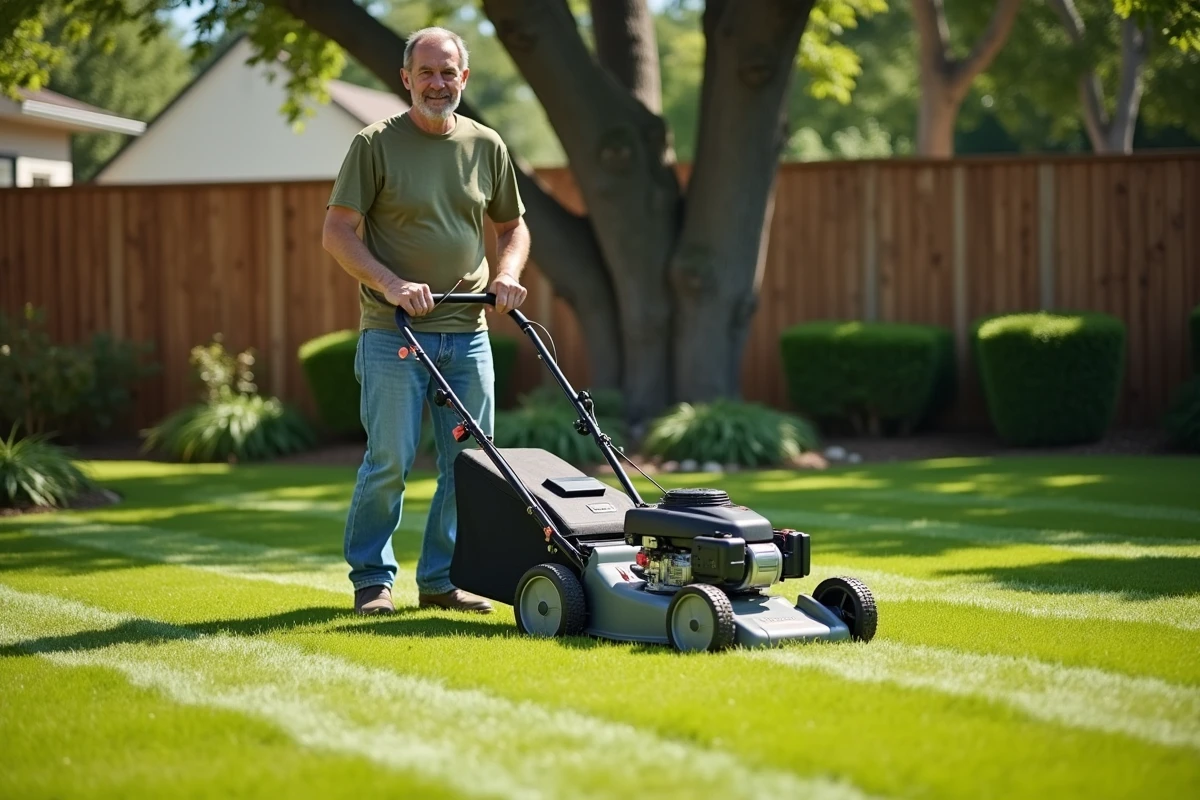
Between an oversized engine that consumes fuel unnecessarily and an undersized model that wears out from the first season, the choice of a thermal mower relies on precise calibration. The cutting width, engine displacement, and area to be mowed form a decision triangle where each mistake costs in fuel, time, and lifespan. This guide compares the technical parameters that separate a profitable purchase from a bad investment.
Engine sizing and cutting width: the ratio that changes everything
Competing guides list power and cutting width as two separate criteria. In reality, they form an inseparable pair. An engine that is too small combined with a large cutting width forces the RPM to be high constantly, which accelerates mechanical wear.
Conversely, a powerful engine on a small width wastes fuel without any productivity gain. Recent tests indicate that a poorly sized model can increase fuel consumption by about 25 to 30% and accelerate engine wear from the first season.
| Land Area | Recommended Cutting Width | Type of Engine |
|---|---|---|
| Less than 500 m² | 40 to 46 cm | 4-stroke engine, low displacement |
| 500 to 1,000 m² | 46 to 51 cm | 4-stroke engine, medium displacement |
| 1,000 to 2,000 m² | 51 to 56 cm | Self-propelled 4-stroke engine |
| More than 2,000 m² | 56 cm and above | Self-propelled or ride-on |
This table reflects a simple rule: the cutting width should be chosen based on the area, not the budget. Buying a 40 cm mower for 1,500 m² of lawn means multiplying passes and pushing the engine well beyond its optimal RPM.
To refine this calibration based on specific models, the comparison of the best thermal mowers details the engine-width combinations by price range.
Thermal mower and regulatory constraints: a criterion that has become technical
Since 2023, several French metropolitan areas have initiated plans to reduce thermal gardening equipment. Paris, Lyon, and Grenoble are among the municipalities that are gradually restricting the use of these machines in public spaces and condominiums.
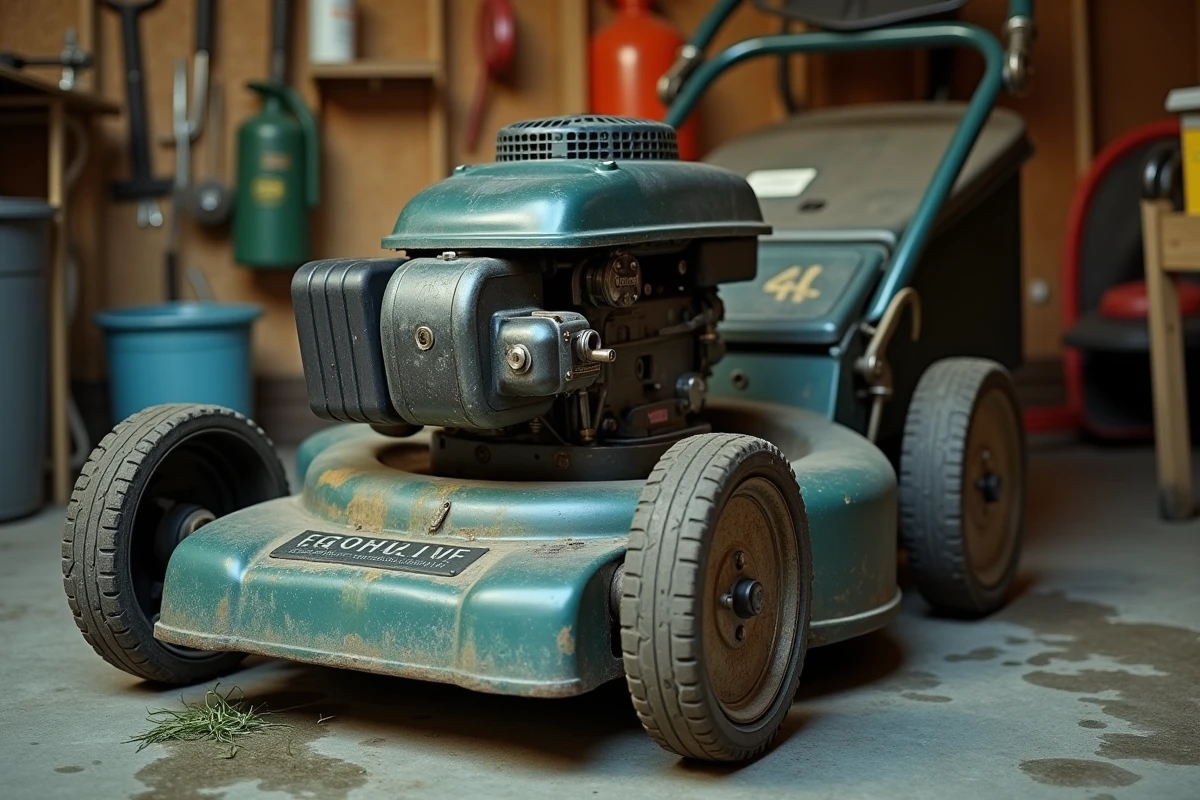
This movement is not trivial for a purchase in 2024. A thermal mower bought today may become difficult to use in urban areas within 5 to 10 years. The restrictions focus on two axes: pollutant emissions and noise.
The 4-stroke engine, which equips almost all current thermal mowers, is quieter than the 2-stroke and does not require an oil-gas mixture. However, it does not meet the noise thresholds that some condominiums are beginning to impose.
- Check the municipal orders of your commune before buying: some limit the operating hours of thermal mowers to very restricted time slots
- In condominiums, the internal regulations may prohibit any thermal equipment in common green spaces
- For areas less than 500 m² in urban zones, a battery-powered mower now covers the same area without regulatory constraints
This criterion does not appear in any classic comparison, but it conditions the actual usage duration of the machine.
Mulching, collection bag, or side discharge: choose based on the grass, not the option
The mulching function finely shreds mowing residues and redeposits them on the lawn. It avoids collection and nourishes the soil. On paper, it’s the ideal solution. In practice, mulching only works correctly on regularly mowed grass, with grass that does not exceed one-third of the total blade height.
If you mow every two weeks or if your land produces thick grass, mulching leaves clumps that suffocate the lawn. The collection bag then becomes the best option, provided you check its capacity: a bag that is too small on a large area requires frequent stops to empty it.
Side discharge, often overlooked in guides, is suitable for semi-wild areas or property edges. It projects the cut grass to the side without shredding or collecting it. On an ornamental lawn, it leaves visible traces.
Models labeled “3-in-1” or “4-in-1” offer these three functions. Ensure that switching from one mode to another does not require tools: on some machines, changing the shutter requires a key and several minutes, which discourages switching during mowing.
Thermal mower or robotic mower: the real calculation to make
Guides dedicated to thermal mowers generally ignore robots, as if it were a category unrelated. However, for medium-sized areas (500 to 1,500 m²), the comparison deserves to be made.
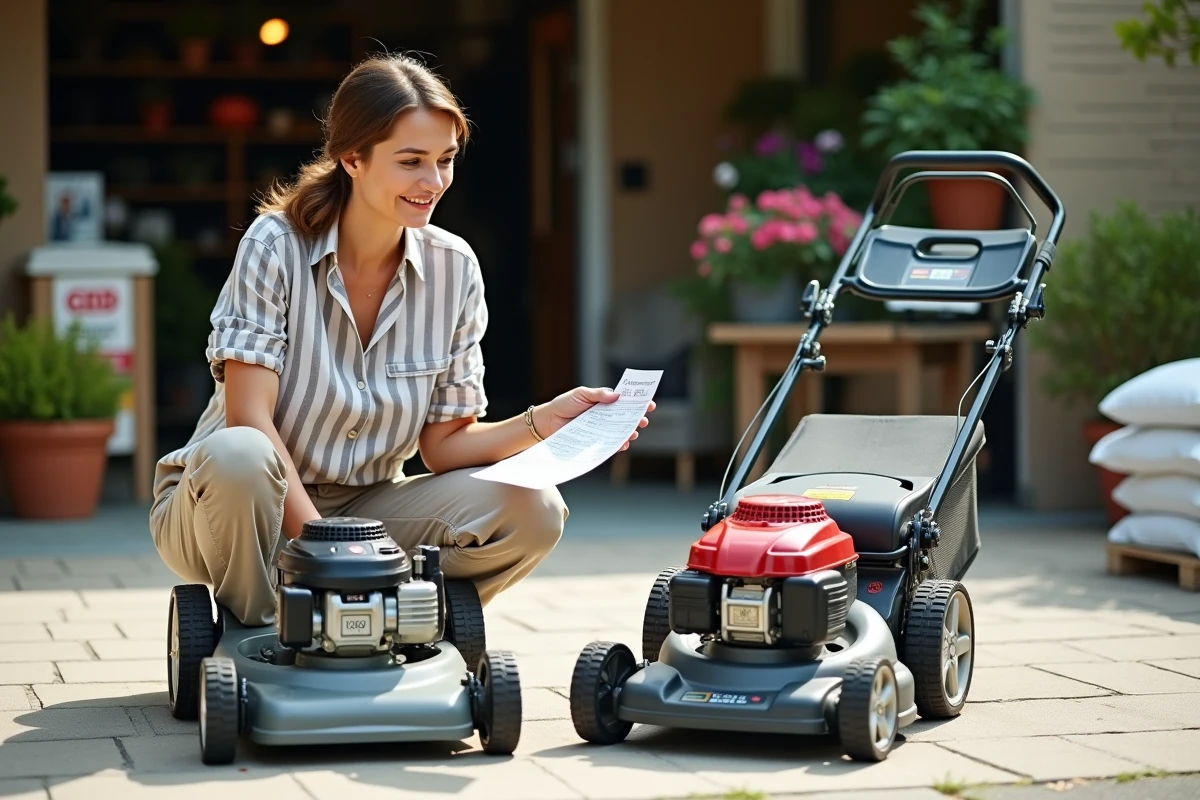
The purchase cost of a robotic mower has significantly decreased in recent years. Recent models reach price ranges that overlap with those of mid-range self-propelled thermal mowers. The annual maintenance cost of a robot remains significantly lower: no fuel, no oil changes, no spark plug to replace.
However, the robot does not handle steep slopes, very uneven areas, or lawns overrun with exposed roots. In these configurations, the self-propelled thermal mower remains more effective. The choice therefore depends less on the initial budget than on the topography of the land and the desired mowing frequency.
Sizing remains the discriminating criterion, regardless of the type of machine chosen. An engine suited to the area consumes less, lasts longer, and produces a cleaner cut. Checking the compatibility between displacement, cutting width, and area before any purchase avoids most of the disappointments reported in user feedback.