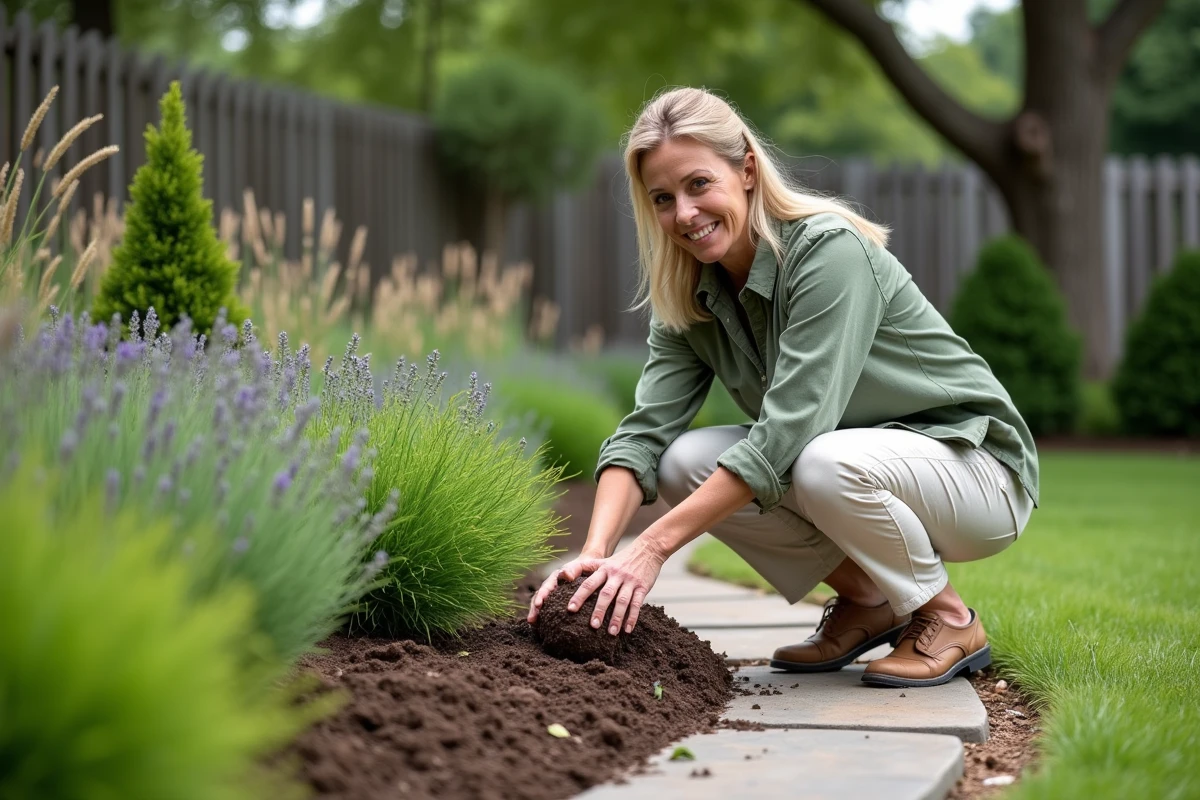
A gently sloping plot facing south and a city garden shaded by party walls require very different work. The success of sustainable landscaping relies less on decorative trends and more on correctly interpreting the constraints of the soil, available water, and actual sunlight. Starting from these concrete data avoids replanting three times and inflating the budget without results.
Soil and drainage: the diagnosis that conditions everything else
Before choosing any plant or surface material, we dig. A forty-centimeter hole filled with water provides a reliable first indication: if the water still stagnates after an hour, the soil is clayey and drainage is insufficient. This simple test radically alters the list of possible plants and the type of foundation for a terrace or pathway.
Clay soil swells in winter and shrinks in summer. Laying slabs directly on it means accepting that they will lift after two or three seasons. The solution involves a layer of compacted gravel or a geotextile, depending on the depth of the problem. On sandy soil, it’s the opposite: water drains too quickly, and plants suffer from drought even after a decent rainfall.
The soil structure can be improved with compost or organic matter, but this takes time. Expect at least a full season before seeing an effect on water retention. This delay must be factored into the project timeline from the start, or else you risk planting in still unsuitable substrate.
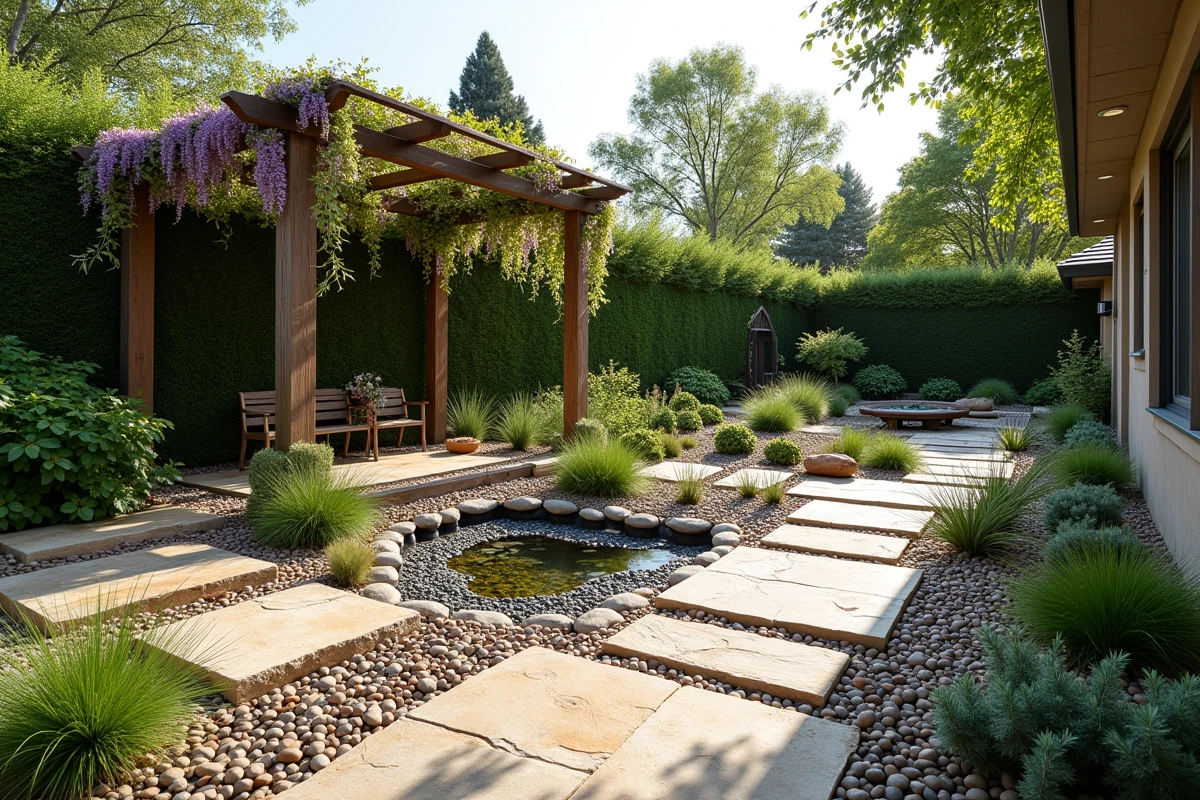
For plots where these constraints accumulate (slope, clay, partial shade), the landscaping proposed by L’Herbe sous le Pied precisely incorporates this diagnostic phase before any plant or mineral intervention.
Choosing plants suited to the climate and actual maintenance
Most gardens that age poorly share a common flaw: plants chosen from a catalog without checking their local hardiness. An olive tree can survive in northern France, but it won’t thrive like it does in Provence. Choosing plants suited to the soil and local climate remains the most cost-effective decision in the long run.
Specifically, we separate the garden areas according to the sunlight observed over a full day, not based on an estimate.
- Areas receiving more than six hours of direct sunlight welcome Mediterranean perennials (lavender, sage, gaura) and fruit trees, provided the soil drains properly.
- Partially shaded areas are suitable for hydrangeas, heucheras, and ferns, which tolerate cooler, wetter soil.
- The strips at the base of north-facing walls, often neglected, support ivy, hostas, or hellebores, plants that require very little maintenance once established.
One point where feedback varies: the frequency of watering in the first year. Some perennials known for their drought resistance, such as rosemary, need regular monitoring during the first twelve months to develop a sufficient root system. After this period, watering can be significantly reduced.
Water management in sustainable landscaping
Collecting and redistributing rainwater changes the game regarding irrigation budgets and the health of plantings. A rainwater collector connected to a downspout covers a good portion of the needs of a medium-sized garden during dry months.
Mulching plays a complementary role that is often underestimated. A layer of wood chips or straw retains soil moisture, limits weed growth, and gradually nourishes the soil as it decomposes. This layer should be renewed once or twice a year depending on the initial thickness.
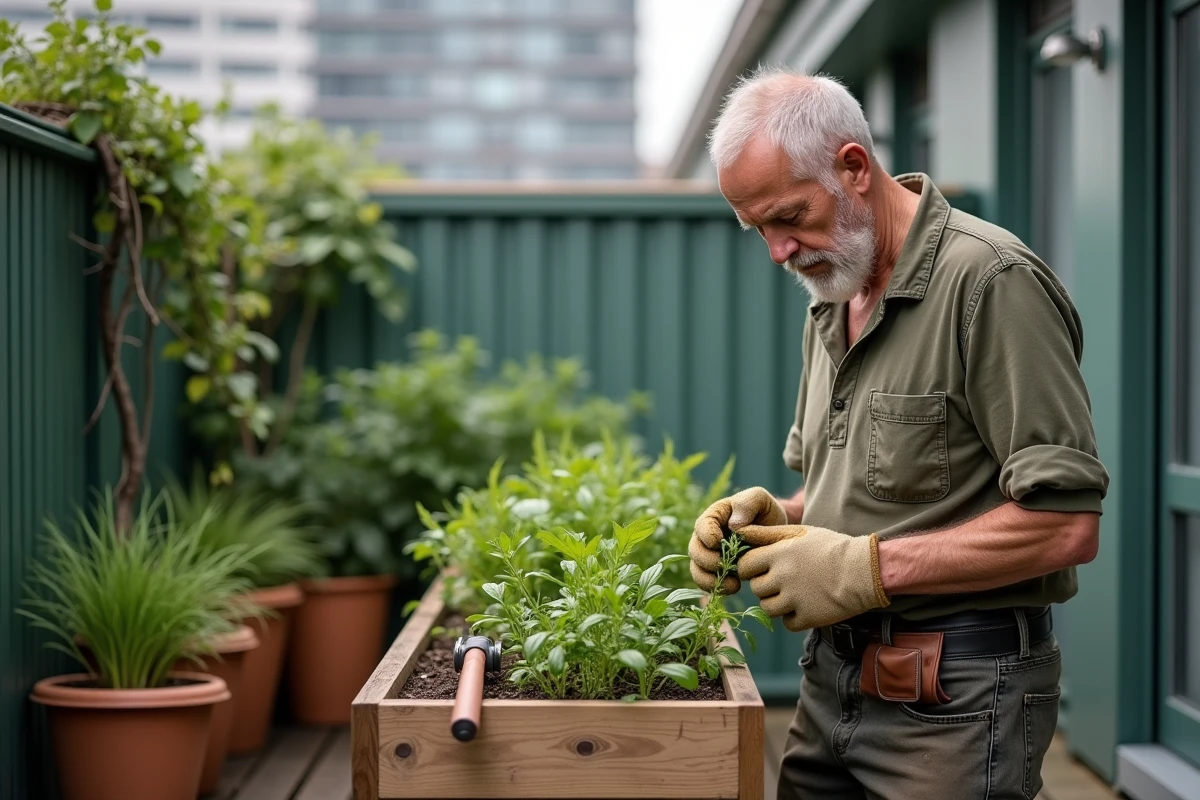
For sloping plots, water management also involves physical adjustments: swales (small vegetated ditches), retaining walls, or successive terraces that slow down runoff. Without these devices, topsoil migrates to the bottom of the garden and tall plantings are left exposed within a few years.
Outdoor lighting and decorative elements: budget and durability
Lighting transforms a garden at night, but it also represents an area where one can easily waste money. Cheap solar lights rarely last more than two summers. Low-voltage recessed lights (LED), though more expensive to install, function for years without replacement.
Light points should be placed according to actual uses:
- Along pathways and steps for safe passage.
- For indirect lighting on a tree or stone wall, to create depth without glare.
- Near the terrace or outdoor table, with adjustable intensity if possible.
Regarding decorative elements, wood remains a common choice for borders, planters, and furniture. Opting for certified wood or locally sourced untreated wood ensures better durability and a reduced environmental impact. Natural stone or corten steel elements age well without special maintenance, unlike decorative concrete, which can crack due to frost.
The overall budget for landscaping largely depends on the ratio between mineral surfaces (terraces, pathways) and planted areas. Vegetated zones are cheaper to create but require regular maintenance. Hard surfaces represent a heavier initial investment, with minimal maintenance afterward. Finding the right balance between these two aspects determines the financial sustainability of the project as much as its visual harmony.
A lasting landscape design relies on choices made before the first shovel of dirt: soil type, actual exposure, water management, and suitable plant selection. The rest—furniture, lighting, decoration—serves to dress a framework that is already solid. It’s better to have a simple and well-structured garden than an overloaded space that requires a complete overhaul after three years.