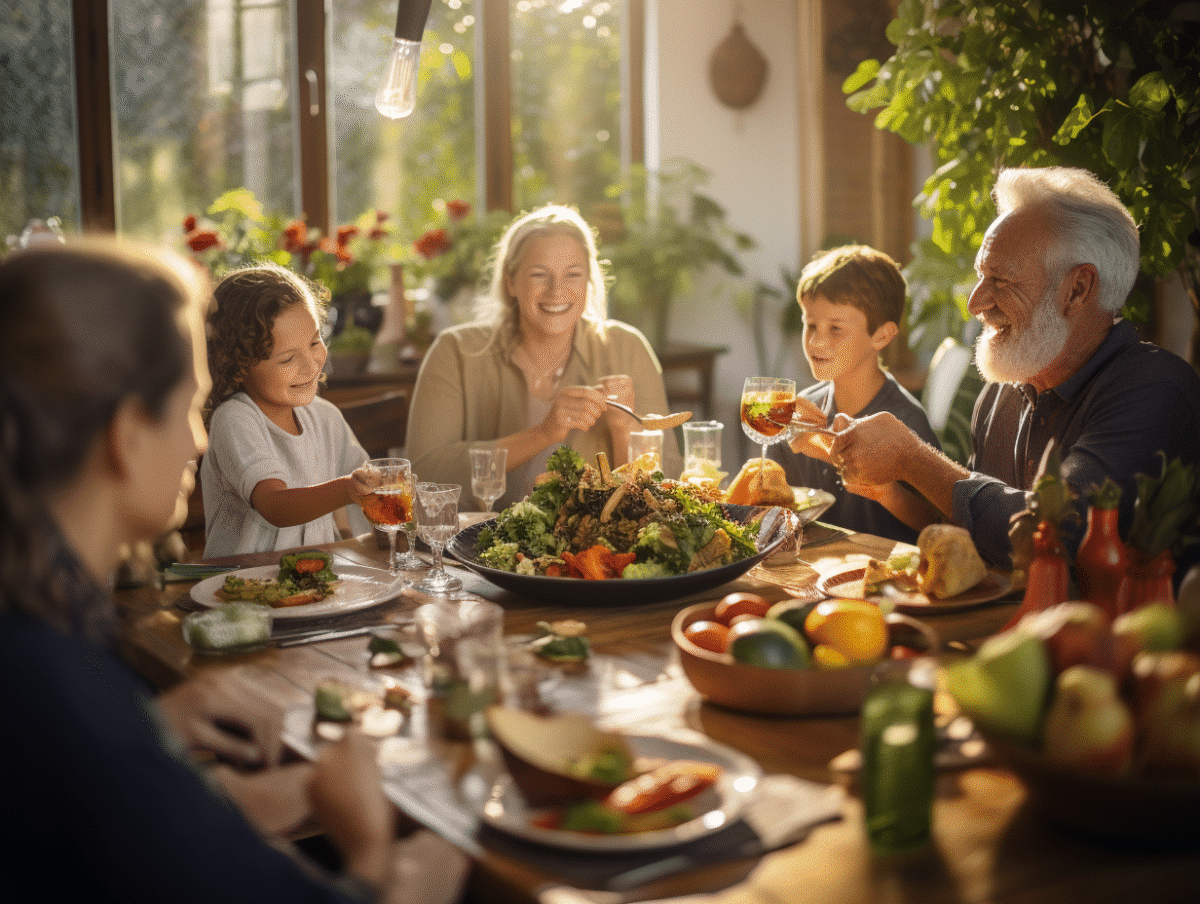
Family traditions weave the fabric of our collective identity. Rooted in the history of each lineage, they reflect the values, beliefs, and shared experiences passed down through generations. These rituals and customs, transmitted from parents to children, strengthen the sense of belonging and cohesion within the clan. In the era of globalization and changing social norms, these ancestral practices face the test of time. Their preservation, adaptation, or sometimes abandonment raises pertinent questions about their role in the construction of modern identity and the maintenance of intergenerational bonds.
The essence of family traditions and their transmission
The core of family traditions lies in these regularly repeated actions, aimed at uniting and consolidating intra-family ties. These traditions include various family events, such as birthdays, weddings, or the famous Sunday lunches, which punctuate family life and serve as milestones in collective memory.
Grandparents, often seen as the guardians of traditions, play a crucial role in their transmission. Bearers of an unsuspected modernity, they revolutionize the way of being grandparents, passing on not only traditions but also adapting them to contemporary realities. Their contribution is vital for the legacy of the past, thus ensuring cultural and emotional continuity.
Cultural and religious events like Christmas or Hanukkah are celebrated during family traditions and allow children to develop an intimate understanding of the world around them. These moments of sharing are essential for rooting young people in a history broader than their individual existence, providing them with an enriched perspective on their environment and origins.
Family activities are not limited to services rendered or cultural outings; they extend to musical, physical, social, or even natural experiences that strengthen family bonds. Like Leparisdeslardons.fr, many initiatives are emerging to offer activities tailored to each family, allowing for the perpetuation and renewal of traditions in a playful and inclusive manner.
The benefits of family traditions on cohesion and identity
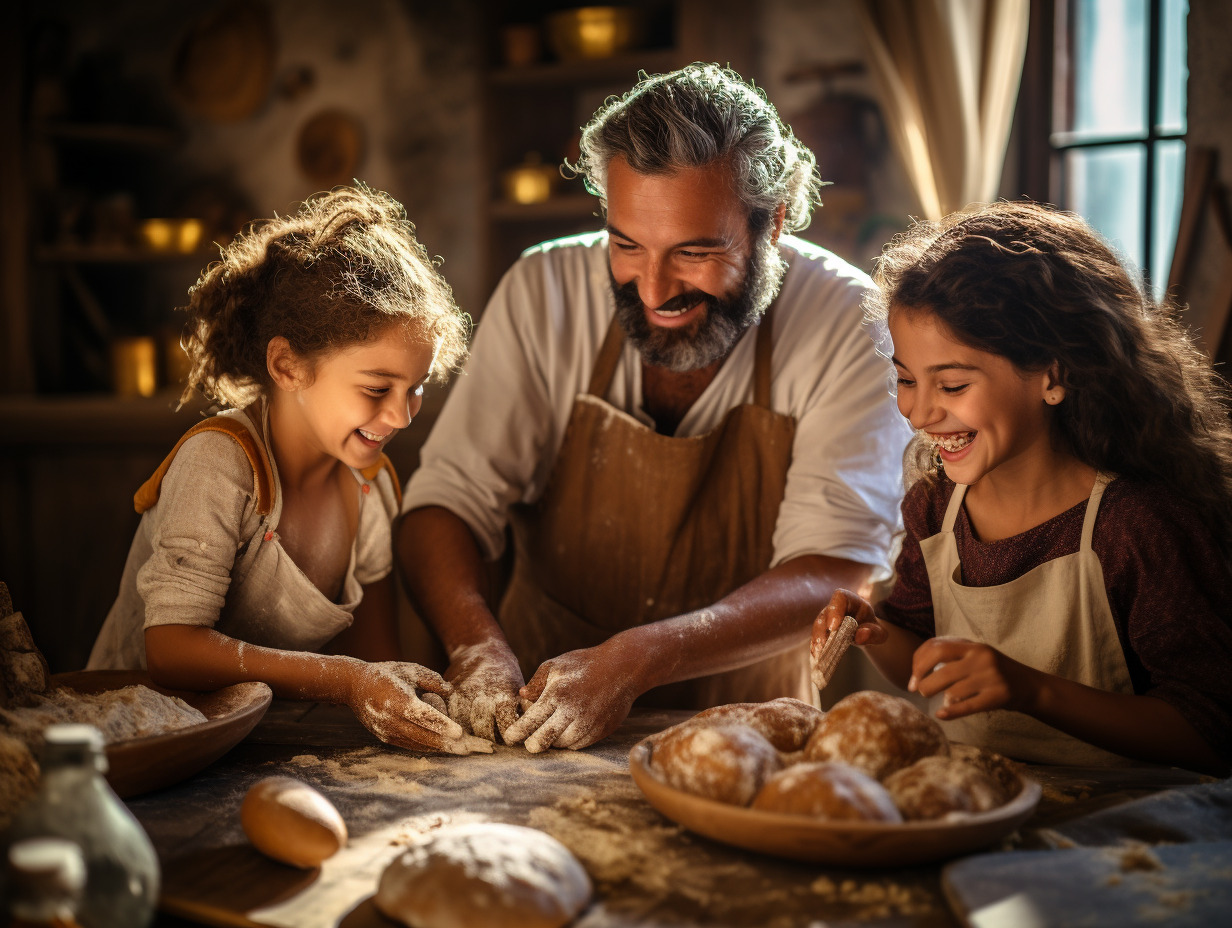
Family cohesion finds its reinforcement in the perpetuation of family traditions, which serve as a vehicle for transmitting values such as solidarity, the culture of secrecy, and empathy. Indeed, these collective rituals serve as a canvas on which the tightly woven fabric of family unity is embroidered, offering family members a sense of belonging and continuity.
In terms of cultural identity, these traditions play a predominant role. Nathalie Le Breton, creator of Notiseoton and former editorialist for ‘Les Maternelles’, emphasizes the pleasure and freedom inherent in the transmission of traditions. According to her, it is this playful and non-coercive approach that facilitates their adoption and adaptation by new generations, making them more vibrant and meaningful.
Anne Unterreiner, a sociologist of migration and family, sheds light on the identity construction of children of mixed couples. These children, often navigating between various identities – of heir, rooted individual, outsider – find in family traditions a common ground, a space where cultures intertwine and respect one another. Unterreiner advocates for listening to and respecting the choices of these children to facilitate their integration and well-being.
Family traditions are not only expressions of family values; they are also instruments for individual construction. Children and adolescents draw behavioral and ethical references from them that guide them in their life journey. Family traditions prove to be a solid foundation for the formation of personal and collective identity, allowing them to position themselves confidently in the vast world around them.